Solo travel is easy—until it isn’t
I froze at the checkout screen at 11:47 p.m., thumb hovering over “confirm,” because the “free cancellation” badge suddenly came with a 72-hour window I’d missed. The room was $38 cheaper than the one I’d bookmarked, but it was “15 minutes from center” in a way that sounded like a promise and felt like a dare. I toggled between map view and reviews, trying to guess whether that walk would be fine at midnight after a delayed train.
In 2026, solo travel is objectively smoother in the parts you can automate: tap-to-pay, eSIMs, ride-hailing, instant translation, and booking platforms that make logistics feel like a game. Compared to ten years ago, you can land tired and still get a SIM, a route, and a bed without speaking to anyone. The convenience can hide risk: “near nightlife” can mean fun or noise; “close to transit” can mean crowds or sketchy platforms. If you like light planning, you’ll love the flexibility—until one bad choice multiplies because you’re the only decision-maker.
The hard parts haven’t been patched by apps: judgment when you’re fatigued, social energy when you’re lonely, and the quiet cost creep of “just one more” taxi, upgrade, or last-minute cancellation. Solo works best when your plan can absorb a late arrival and your lodging is boringly reliable. If you’re on the fence, treat your first booking as a safety purchase, not a bargain hunt.
Pick the destination that forgives mistakes
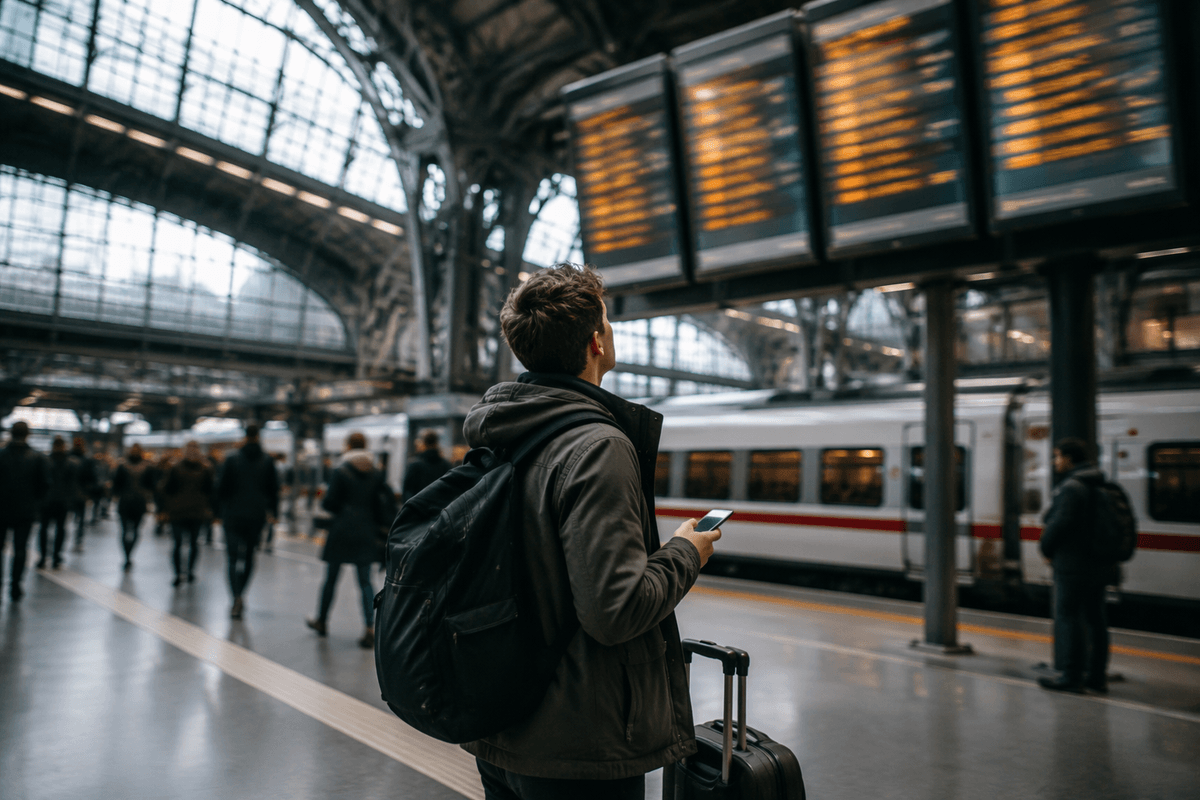
At 6:10 p.m. I stood on a platform staring at two trains going opposite directions, both “on time,” both with station names that looked almost identical on my screen. I could feel the little solo-travel math happening: pick wrong, lose an hour; pick right, arrive calm enough to talk to someone at dinner. That’s when “forgiving” started to matter more than “dreamy.”
A forgiving first destination is the one where small errors stay small. Think places where transit is frequent and legible, where walking from point A to point B doesn’t involve unlit shortcuts, and where neighborhoods aren’t a patchwork of “fine” and “don’t” separated by one wrong turn. Compared with somewhere car-dependent or sprawling, a compact city buys you slack: a missed bus doesn’t become a $40 ride, and a tired night doesn’t force a complicated route back. The easiest hubs are often pricier, so you’re paying for predictability, not novelty.
I’d also weight the “what if” infrastructure: late-night arrivals that still feel normal, lodging with 24/7 check-in or clear self-check-in, and a deep inventory of midrange hotels/hostels so you can change course without a penalty spiral. If you want to meet people, pick a place with obvious social lanes—walking tours, hostel common areas, café culture—because forcing connection in a quiet beach town can feel like work. When I’m unsure, I choose the destination that lets me be slightly incompetent for 48 hours and doesn’t charge me for it.
Build a plan that won’t collapse

At 7:52 a.m., with a coffee cooling beside my laptop, I watched my “perfect” day plan buckle because a museum entry slot was sold out and my train app flashed a platform change. I’d stacked three neighborhoods like dominoes, assuming I’d feel energetic and decisive all day. The weird part wasn’t the hiccup—it was how quickly one small slip turned into that tight, solo-travel spiral of rerouting, rebooking, and second-guessing.
The plan that holds up isn’t detailed; it’s modular. I aim for one anchor per day (a booking, a hike, a long museum) and keep everything else as “nice if near,” because compared to traveling with someone else, you don’t get to hand off navigation when your brain is fried. The trade-off is you’ll see fewer marquee sights, but you’ll waste less money fixing avoidable mistakes—like taking two taxis because you overcommitted across town. If you don’t love overplanning, this approach still gives you structure without turning the trip into a schedule you resent.
I also build two buffers that feel boring until they save you: a “late arrival” routine and a “low battery” route. Late arrival means your first night is within an easy transit line (or a short ride) and check-in doesn’t require perfect timing; low battery means you can get back without hero-level navigation—one known bus, one known metro, one known street. It works best for 7–10 days because fatigue is predictable; the only question is whether you budgeted for it or pretended you wouldn’t have any.
Make safety and money automatic
At 9:36 p.m., I stood under a too-bright pharmacy sign trying to decide whether to pull out my wallet or my phone, because the street behind me had thinned out fast. The purchase was small—water, a snack—but the real question was whether I’d built the kind of trip where “one weird moment” stays small. That’s the solo threshold: not zero risk, just fewer decisions made in public while tired.
In 2026, the best safety move is reducing improvisation. I keep one “out-and-about” payment method (tap-to-pay on my phone or a single card) and lock everything else down: a backup card stored separately, spending alerts on, and a daily limit that won’t ruin the trip if something goes missing. It’s slightly annoying when a place is cash-only or a terminal won’t tap, but that friction is cheaper than replacing an entire wallet. This works especially well for mid-budget travelers who don’t want to track every coffee, but it’s less ideal if you hate any banking setup before you leave.
Money leaks when you’re fatigued, so I pre-decide the expensive conveniences: two “yes” taxis per day (or none), one paid attraction, and a lodging rule that prioritizes boring reliability over the last 15% of savings. Safety gets the same treatment—share location with one person, keep offline maps, and have a dead-simple “back to base” route. If you’re debating whether solo is manageable, ask yourself: could you land late, pay for a short ride, and check in without negotiating with your future exhausted self?
What I’d do for a first solo trip
On day two, around 4:40 p.m., I’d be standing in a hostel lobby (or a small hotel with a real front desk), hovering over the “join” button for a walking tour that started in 20 minutes. My bag would still be half-unpacked, my phone at 28%, and I’d be debating whether to push through or take a quiet hour and risk feeling lonely later. That’s the first-solo friction point: social plans require timing, but rest is what keeps your judgment intact.
For a 7–10 day first trip, I’d pick one compact, transit-friendly base and do zero overnight hops until I’ve proven I can handle the rhythm. Compared to bouncing cities, staying put costs a little more per night but saves money on missed connections, late check-ins, and “I’m too tired to figure this out” rides. I’d book the first three nights somewhere boringly predictable, then leave the middle flexible—works well if you like freedom, less so if uncertainty spikes your anxiety.
I’d schedule two “social lanes” that don’t depend on charisma: a small-group tour on day 2 and a food crawl or class on day 4, then treat everything else as optional. If I felt off, I’d choose the safe, unsexy move—early dinner near my lodging, a direct route home, and sleep—because the trip only stays fun if tomorrow is usable. The decision cue I’d watch for is simple: am I choosing adventure, or am I negotiating with exhaustion?