What ube really is versus what we taste
The first sip of an ube latte can feel like you’ve found a “vegetable dessert”—earthy, vanilla-like, and sweet all at once. That sweetness is where people often misread what they’re tasting. Ube is a purple yam, so on its own it’s mostly starch with some fiber and micronutrients, not a candy-flavored superfood.
In a lot of café drinks and bakery cases, the flavor you register as “ube” is a blend: ube plus sugar, condensed milk, cream, syrup, flour, and sometimes added coloring. If ube is there at all, it may be a smaller supporting ingredient, while the main calorie load comes from the sweeteners and fats that make it feel rich and comforting.
A quick reality check is how the product behaves in your body. If it tastes intensely sweet and leaves you hungry again soon, that can fit a pattern of refined carbs and added sugar dominating, with ube playing more of a color-and-aroma role than a filling base.
Calories and macros in everyday portion sizes
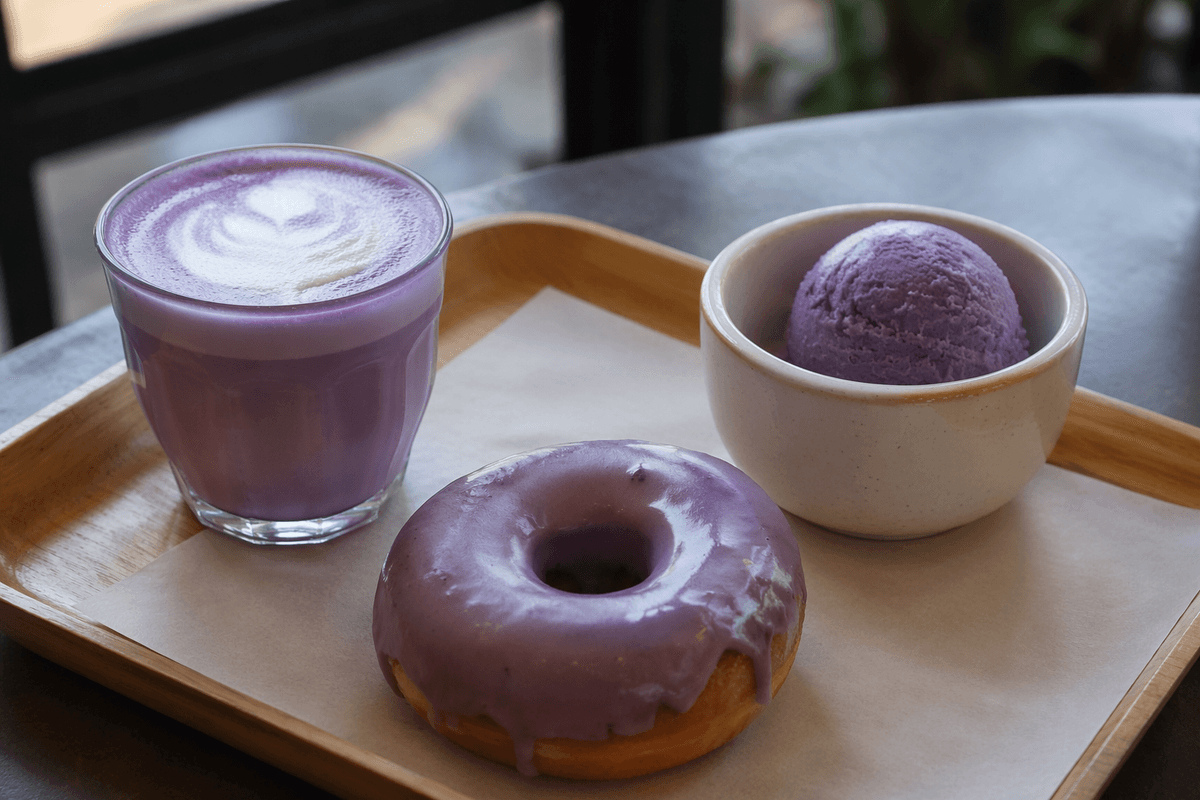
The part that trips people up is how “light” an ube order can look on the counter, then how heavy it feels later. A latte cup, a single donut, a neat scoop of ice cream—portion-wise it reads as small. Macro-wise, it often isn’t. The drink is usually built on milk and sweetener, the pastry on flour, sugar, and fat, and the ube component may be closer to flavoring than a main ingredient.
Whole ube itself is mostly carbohydrate, with a bit of fiber and very little fat. That’s a different profile from most ube desserts, where fat climbs fast (butter, cream, coconut, egg yolks) and “carbs” often means refined flour plus added sugar. The result is a treat that can hit like a fast carb-and-fat combo: easy to finish, not always especially filling, and sometimes followed by a mid-afternoon slump if it replaces a more balanced snack.
If you’re comparing products, the most practical cue is ingredient order and how sweet the first bite tastes. When sugar, syrups, condensed milk, or flour lead the list, you’re mostly paying calories for the base—ube is there, but it’s rarely doing the heavy lifting.
Vitamins, minerals, and what they actually do
Sometimes the label looks reassuring—“made with real ube”—and it’s easy to assume you’re getting a meaningful vitamin boost along with the purple color. Then you check the ingredients and realize the “real” part might be a spoonful of ube paste in a base that’s mostly milk, sugar, and flour.
Whole ube can contribute small-but-real micronutrients like potassium (often tied to fluid balance and that “puffy” feeling after salty meals), vitamin C (more about supporting normal tissue repair than a quick energy lift), and a handful of B vitamins and minerals that help your body run everyday metabolism. These nutrients tend to matter most when ube is a real portion on the plate, not a flavor accent.
In ube ice cream, donuts, or sweet lattes, the practical outcome is often that sugar and fat set the “feel” afterward—satiety, cravings, and energy—while the vitamin/mineral contribution stays modest unless ube shows up early and prominently on the ingredient list.
Purple pigments and everyday antioxidant expectations
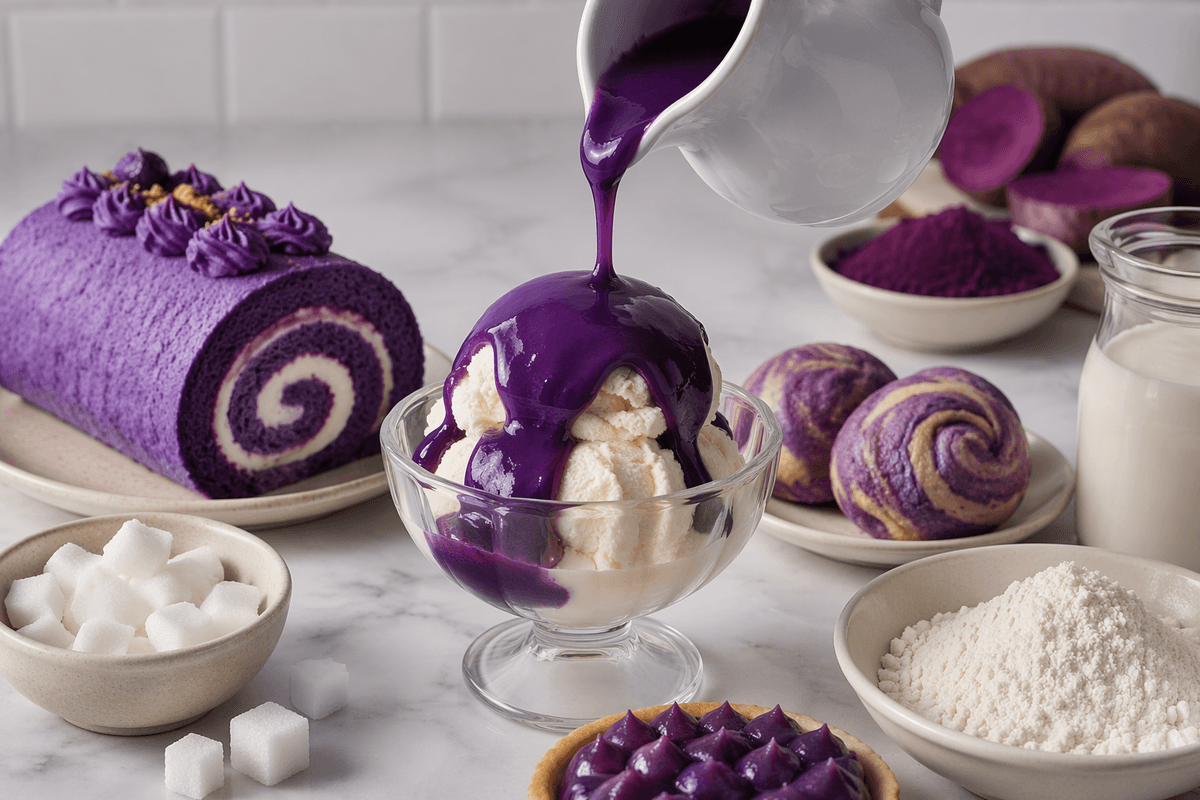
You notice it first in the foam: that deep purple that makes the drink look almost “functional,” like the color itself is doing something. It’s a common leap—purple equals antioxidants, antioxidants equal a health upgrade. But in ube treats, the pigment can be real while the portion is still small, and the rest of the recipe (sugar, flour, cream) still drives how the snack lands.
The purple in ube comes from plant pigments that can act like antioxidants in the body, but the everyday expectation can get inflated. Heat, dilution, and storage can lower the impact, and your body doesn’t treat “antioxidants” like a switch you flip with one latte. If the product is mostly syrup and dairy, you may be getting color and aroma without much of the whole-food matrix that usually travels with those pigments.
You can finish something vividly purple and still feel that quick return of hunger, or a sweet aftertaste that keeps your brain looking for “one more bite.” That pattern doesn’t mean ube has no value—it just hints that, in that specific item, the pigments are riding along while the added sugars do most of the heavy lifting.
Fiber, fullness, and the slow-burn energy pattern
The difference often becomes apparent not long after eating. An ube pastry or drink may look filling at first, yet an hour later your stomach already feels empty again. In other cases, the food feels surprisingly heavy, even though your energy still fades quickly. That mismatch happens because fullness and sustained energy don't always go together, especially when refined flour and added sugar make up most of the recipe and the ube contributes more color and flavor than substance.
Fresh ube naturally contains starch along with dietary fiber, a combination that digests more gradually than sugar alone. Fiber helps slow carbohydrate absorption and adds bulk, making a serving of cooked purple yam feel more satisfying over time. Many popular ube treats, however, contain relatively small amounts of the actual root, so they provide little of that slower-digesting effect.
The ingredients surrounding the ube usually have a much greater influence on how the food feels afterward. Sweet drinks pass through the stomach quickly, finely milled flours are digested rapidly, and added fat creates richness without always extending satiety. If an ube latte is followed by lingering sweetness, returning hunger, or an energy dip later in the morning, those effects are more likely to reflect the overall recipe than the ube itself.
When a “healthy ube treat” backfires unexpectedly
It often shows up as a small surprise later: you finish an ube latte or a “lighter” ube dessert and, instead of feeling satisfied, you’re scanning the pantry sooner than expected. The color and “yam” label can make the choice feel steadying, so the quick return of hunger can feel like a personal misread—when it’s usually the recipe’s structure doing what it does.
A lot of “healthy ube” items are still built like treats first. If the ube is mostly a swirl of paste or a spoon of powder, the bulk of the carbs may be coming from sugar and refined flour that break down fast, especially in a drinkable form. Add fat from cream, coconut milk, butter, or egg yolks, and you can get a combo that tastes substantial while still slipping past your fullness cues—easy to finish, then followed by a dip and a pull toward something else.
The backfire is usually more subtle than a sugar “crash.” It’s the pattern: sweet aftertaste that keeps lingering, a second snack that becomes automatic, or a portion that quietly grows because the first one didn’t land. When that keeps happening, it’s often a sign you’re buying “ube-flavored” comfort food and expecting “whole ube” staying power.
Choosing ube forms that fit real-life routines
You can feel the difference on a busy day: an ube latte that goes down fast versus a bowl that takes a spoon. Liquids and whipped desserts tend to slide past fullness, even when they’re calorie-dense, so they’re the easiest place to overestimate what “ube” is doing for you.
If you’re trying to get more of ube’s whole-food side, the forms that behave most like food are usually the ones where ube is the bulk—chunks, mash, or a thick paste used in a real portion. In cafés and packaged items, “ube flavor” often means a small amount of powder or extract carried by sugar and dairy. Ingredient order helps, but it’s not perfect: some products use vivid color with very little yam.
The most reliable feedback is still your own pattern. If a specific ube treat regularly leaves a sweet aftertaste, quick hunger, or a later snack that feels automatic, it’s probably fitting your routine as dessert—not as the “yam-based” option you thought you were choosing.