You want flexible cash, but the math feels fuzzy
On paper, Shipt looks like the clean version of side income: open the app, grab an order, get paid. Then the first practical questions show up at an inconvenient time—usually when you’re staring at your gas gauge and realizing your next free evening is only two hours long. The payout on an offer might look fine in isolation, but it’s hard to tell what’s “extra cash” versus what’s just borrowing against your car and your time. The uncertainty isn’t philosophical; it’s whether a week of small orders can quietly turn into a low hourly rate once the basics are counted.
The fuzzy part is that Shipt doesn’t behave like a simple hourly job. Each order has a posted payout, but the real number depends on how far the store is, how spread out the drop-off is, and whether the order size turns a quick run into 50 minutes of shopping. Even before tips, a $14 order can shrink fast if it adds 11 miles, a parking hassle, and a checkout line. That’s why the first pass at “earnings” has to start with a rough cost per mile and a realistic minutes-per-order estimate, not the headline payout.
Applying is easy; qualifying can surprise you
The first small relief is how fast the signup feels. A few screens, some identity details, and it’s tempting to think the hard part is over. Then the timeline stretches. Background checks can take longer than expected, and if your free time is tied to a specific weekend, that delay matters. Even once you’re “approved,” it’s not unusual to hit a second kind of waiting: the app is live, but the order board in your area isn’t.
Qualifying also isn’t only about passing a check. Shipt effectively asks whether your setup can handle grocery work without creating customer problems. A reliable car, insurance that’s actually current, and a phone that doesn’t freeze mid-shop become practical requirements, not nice-to-haves. If you’re planning to shop after your day job, store hours and alcohol-delivery rules can quietly cut the number of available orders, which changes the entire earnings picture before you’ve accepted anything.
The surprise is that “active” doesn’t always mean “earning.” If your metro is slow or saturated, you can spend 30–45 minutes refreshing offers and still end up taking a marginal order just to get started. That early friction is a useful signal: it tells you whether Shipt is a dependable cash option in your zip code, or a sometimes-app that only works when demand spikes.
Your first orders reveal the real pay model
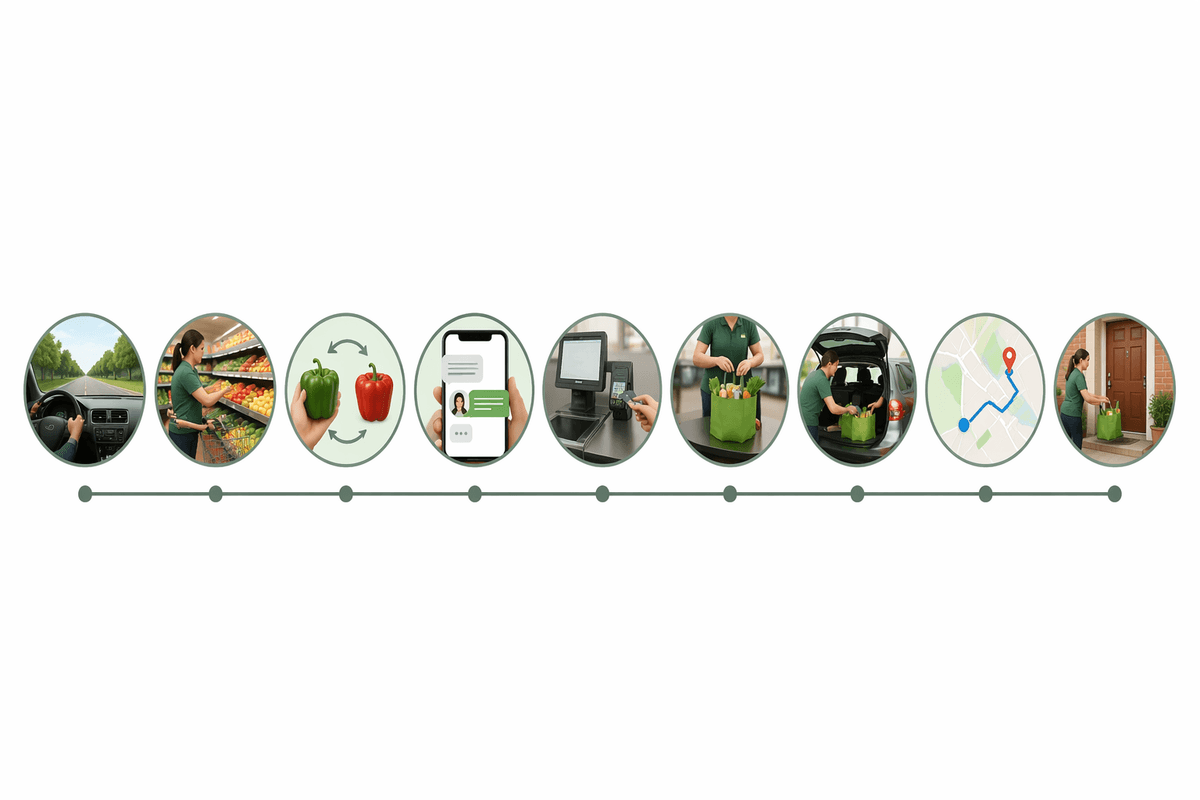
The first time you accept an order, the “pay model” stops being a number and turns into a sequence of timers. You notice how often the store isn’t the one you would’ve chosen, how long it takes to find two missing items, and how checkout speed can swing based on one understaffed lane. The posted payout might be $12–$18, but the app is effectively paying for a bundle of tasks—drive to store, shop, substitute, communicate, check out, bag, load, drive, deliver—where any one snag turns a “quick” order into an hour. If you’re shopping after work, that timing risk is the first real constraint.
Within a few orders, you also see why Shipt can feel inconsistent compared to apps that lean harder on mileage formulas. A small, well-organized list for a nearby customer can beat a larger payout that sends you across town and into a crowded store. Promos and peak offers help, but they can also show up because the order is inconvenient (late window, long distance, heavy items). That’s when the practical rule emerges: the listed pay is only the starting line, and your net rate is mostly decided by how predictable the shop is and how controllable the miles are.
The early mistake is chasing “bigger” orders before you have your own baseline. Track three numbers from day one: minutes from accept-to-dropoff, total miles, and whether the customer responded to substitutions. If an order clears under 45 minutes at under 8 total miles, it usually has room for gas and wear; if it’s 75 minutes and 16 miles, it needs a tip to look competitive. After a handful, you’re no longer guessing—you’re seeing the model you’re actually being paid under.
Net pay starts with miles, not the payout
Once you’re tracking accept-to-dropoff minutes and total miles, the pattern gets uncomfortable: the order’s posted pay barely matters if the miles sprawl. Shipt isn’t only paying for “delivery miles.” You’re eating positioning miles to the store, the drive to the customer, and the deadhead back toward a hotspot. If a $16 order turns into 14 total miles, the vehicle cost is doing more damage than the payout admits, especially if you’re shopping during rush hour and those miles also inflate time.
The clean way to sanity-check net pay is to price each mile before you accept. Even a conservative all-in estimate (gas plus maintenance and depreciation) makes long, low-complexity orders look less attractive than they appear. Then add the friction costs that don’t show up in the app: parking, apartment gates, and “one missing item” texts that turn a 35-minute shop into 55. When miles are tight and predictable, the same payout starts behaving like real hourly income instead of a car-funded advance.
Tips and ratings: where income gets volatile

After a few clean, close-in orders, the app can start to feel solvable—until two deliveries in a row end with silence. No tip, no message, just the base pay settling in your earnings tab. The swing is sharp because tips aren’t a bonus on Shipt; they’re often the difference between “fine” and “why did I do that?” It gets worse when a tipped order posts quickly and trains you to expect the same timing, then the next customer tips days later (or never), so last night’s “hourly rate” was partly imaginary.
Ratings add a second layer of volatility that doesn’t look like money at first. A single low score tied to out-of-stocks or a substitution disagreement can follow you into the next week by affecting what offers you see, especially if you’re still building history. That pressure changes behavior: shoppers accept safer, smaller orders, over-message customers to protect the rating, and sometimes avoid promo orders because late windows invite complaints. The constraint isn’t just pride—it’s access. Protecting tips and ratings becomes part of protecting your future order flow.
Staying active without losing money or access
Once ratings start feeling like access, “staying active” stops meaning “take more orders.” It turns into a filter: only accept work that you can finish cleanly inside the window without sprinting. Late deliveries and sloppy substitutions are the fast path to low ratings, and low ratings quietly change what you’re even shown. The time constraint is real if you’re squeezing this into weeknights; a 6–7 p.m. order that looks doable can collapse if the store is understaffed or the customer goes unresponsive.
The money constraint usually shows up as dead miles. To avoid paying for your own activity, batch errands around a single store, and decline anything that forces a long reposition unless the payout is clearly promo-heavy. Keep a personal floor—like “no more than 10 total miles unless the base pay already clears my hourly target”—and treat it as non-negotiable. The odd benefit is that saying no protects both net pay and the metrics that keep good offers available.
A realistic 30-day test to decide fit
Give Shipt one calendar month, but run it like a small experiment, not a hustle. Set a fixed schedule you can actually repeat—say 3 weeknights plus one weekend block—and cap it so it doesn’t leak into your day job or family time. In a notes app, log every order’s accept-to-dropoff minutes, total miles (including to-store and the drive back toward home), base pay, and tip date. The friction matters too: unresponsive customers, checkout delays, gated drop-offs.
At day 30, decide using thresholds, not vibes: net $/hour after your per-mile cost, tip rate (tipped orders divided by total), and how often you had to take “bad” miles just to stay active. If the good weeks rely on rare promos or a couple of big tips, treat that as instability—then compare the same hours to your best alternative app before you keep going.







![6 Best Money Market Funds [Protect Your Savings in 2026]](static/image/2026/07/14/fc8225e7-a6f6-459f-8150-f54bd9c52f6f.png)