The overlooked value hiding in papery layers
The moment you slice into an onion, the outer skin usually lifts off in one dry sheet, light as packing paper. It feels like the definition of “trash”—no moisture, no tenderness, nothing you’d want to chew. So it goes straight into the bin, and the useful parts get blamed for being “not oniony enough” unless you add more salt, more butter, or a bouillon cube to push the flavor.
But those papery layers are where the onion has been doing a lot of its defensive work. The skin concentrates pigment and aromatic compounds that don’t always show up when you sauté the sweeter inner flesh. When you steep skins in something wet—broth, beans, rice water, a tomato sauce that needs depth—they release color first, then a savory edge that can make the whole pot taste more “finished.”
One onion’s skin is nearly scentless; another can turn a pot deeply amber in minutes. Still, once you notice that the most throwaway-looking layer can change both flavor and color, it’s harder to see it as worthless.
Why skins deepen flavor more than you expect
You can see it most clearly when the pot first hits a simmer: the liquid goes tea-colored before it smells strongly of onion. That throws people off. If it’s not fragrant, it must not be doing much—so the instinct is to toss in extra salt or a spoon of paste to “wake it up.” But skins often work in a quieter way, building the kind of background savoriness you notice only when it’s missing.
Those outer layers spend the onion’s whole life taking hits from air, light, and handling, and they end up packed with protective plant compounds and sulfur-linked aromatics. In water-based cooking, that matters. The inner flesh gives sweetness and moisture; the papery layers tend to give the browned, slightly tannic edge that makes beans taste meatier and simple rice taste like it was cooked in a real stock.
It’s still not perfectly predictable. A mild yellow onion may barely register, while a deep-gold skin can push a sauce toward “too dark” fast. But when it works, it shifts flavor without adding heaviness.
Color payoff that changes how food feels
The first time you fish the skins out, they look like they’ve done nothing—still papery, still intact—yet the pot has turned a deep amber. That shift can feel cosmetic, like you’ve just stained the broth. But on a weeknight, that color is part of why the bowl reads as “richer,” even before you add anything extra.
In lighter foods, the effect is loud. White beans take on a café-au-lait tint, rice goes from pale to golden, and a quick chicken stock stops looking thin. Our brains tie darker, warmer tones to longer cooking and deeper flavor, so the same salt level can suddenly taste more rounded. It’s not that the skins add a big onion punch; they often add the impression of roastiness and body.
A very dark simmer can make you think it’s over-seasoned or “burnt” when it’s just pigment, while a pale batch may tempt you back toward bouillon. Watching how color changes your expectations is part of learning when skins help—and when they’re just decoration.
Nutrients and antioxidants, plus realistic limits
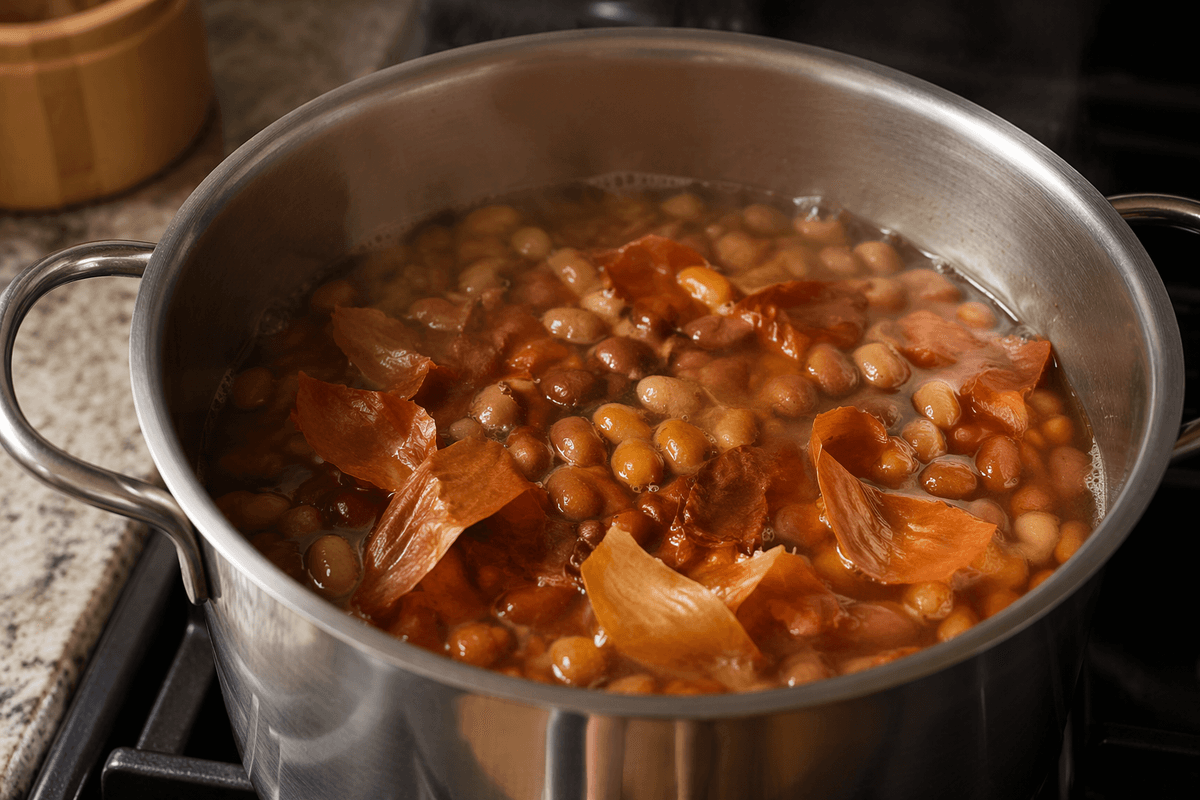
When the skins hit hot water, you might notice a faint “tea” smell and assume you’re pulling mostly color, not much else. But those papery layers tend to be where the onion concentrates a lot of its protective plant compounds, which is one reason the liquid darkens so quickly. In practice, that means a pot of beans or a simple grain pilaf can get a little extra depth while you’re also extracting more of the onion’s natural compounds than you would from the sweeter inner flesh alone.
If you steep skins and then strain, you’re not eating fiber, and you’re not getting a dramatic nutrition upgrade—more like small, steady “bonus” compounds riding along with the flavor. Amount matters, too: a few skins in a big pot are subtle, and that subtlety is exactly why people end up reaching for bouillon anyway, forgetting they’ve already improved the base.
When saving skins creates bitterness or grit
It usually shows up at the end: you taste the broth and there’s a dry, slightly puckery edge that wasn’t there earlier. Or the beans look gorgeous and amber, but the spoon drags up little papery flecks that make the texture feel dusty. That’s the moment people decide onion skins are a gimmick—because the “scrap” taste suddenly feels louder than the real food.
Skins can do that when they’re pushed too hard or used too heavily. The same compounds that give that roasted, tea-like depth can also read as tannic when the simmer is long, the pot is small, or the skins are very dark. If bits break down, they don’t melt like onion flesh; they hang around as grit, especially in thinner liquids where there’s nowhere for them to hide.
It’s also easy to mistake pigment for bitterness. A broth can go deep brown fast and look “overcooked,” so you brace for harshness and interpret any dryness that way. Sometimes the fix is as simple as fewer skins, or pulling them out earlier, but it’s not always obvious until you’ve done a few batches.
Hidden friction: cleanliness, sprays, and storage
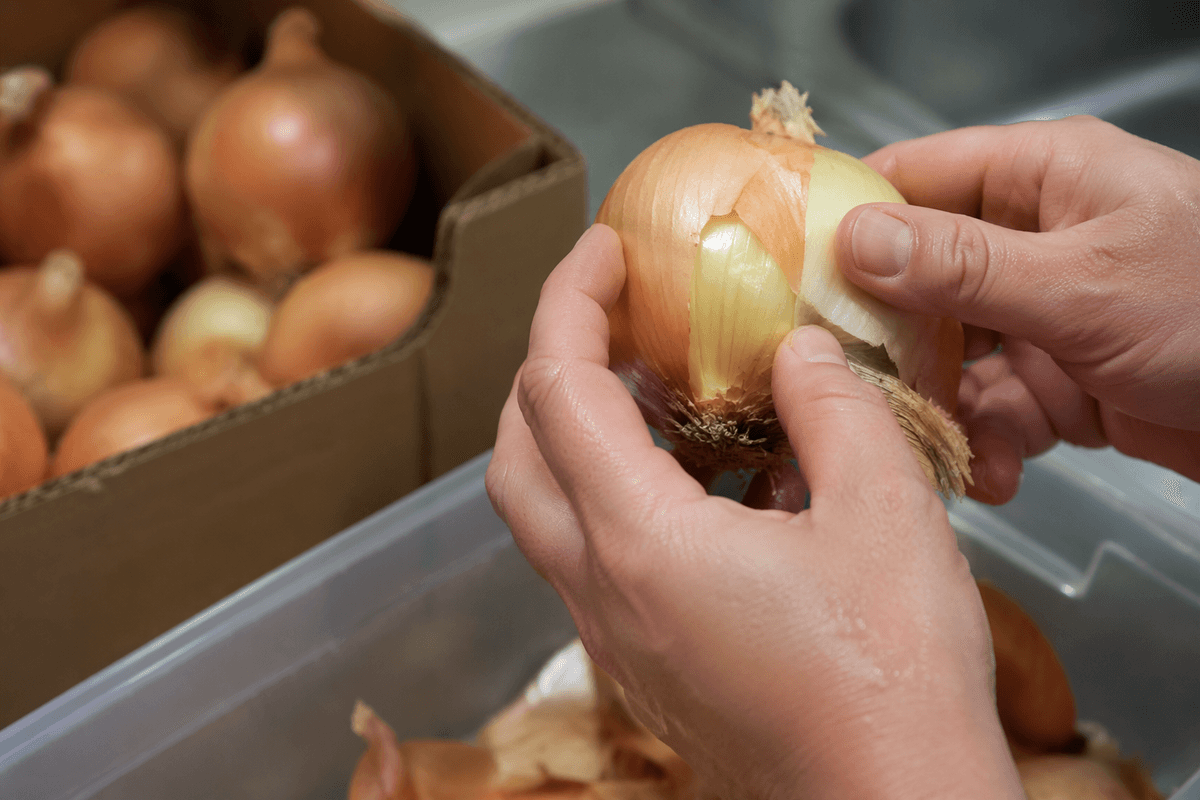
It’s usually when your fingers feel slightly tacky from peeling that you hesitate. The skins look clean, but they’re the part that’s handled, shipped, and rubbed against boxes and bins. If you’ve ever caught a faint “storage” smell on the outside of an onion, it’s hard to feel confident dropping those layers into a pot you plan to eat all week.
That’s the quiet friction: you can’t rinse papery skins the way you rinse a carrot. Water makes them cling and tear, and wet skins don’t save well. On top of that, many onions are treated with sprout inhibitors after harvest, and the outer layers are where residues would land first. None of this means the skins are unusable, but it does make people default back to packaged broth because it feels simpler and more controlled.
A jar of “future stock” skins can get musty if it traps humidity, or it can pick up freezer odors if it’s not sealed well. When the process feels fussy or uncertain, the habit dies—usually right when you’re trying to cook fast.
Low-effort ways to make the habit consistent
It’s usually a Tuesday-night thing: you peel an onion, glance at the skins, and the quickest move is still the trash—especially if your hands are already sticky and the cutting board is crowded. The goal isn’t to treat skins like a precious ingredient. It’s to make “save or toss” a near-automatic decision you don’t have to debate while dinner is moving.
What tends to work is keeping the system as dry and boring as the skins themselves. A small paper bag or open deli container in the pantry or near the onions is often easier than a jar (jars trap stray humidity and odors). If the skins feel questionable—muddy, tacky, or strongly “storage”-smelling—that’s your cue to skip them without guilt. Consistency comes from only saving the ones you feel fine about using.
Then you give them one job: a short steep. Drop a pinch into beans, rice, or a pot that’s already simmering, and plan to pull them once the color turns. That way you get the amber lift and quiet savoriness without turning the week’s food into a tannic experiment.