How kimchi and sauerkraut actually differ in practice
The first difference usually shows up before you even swallow: kimchi tends to announce itself with garlic, chili, and a sharper aroma, while sauerkraut is more “one-note” in a way that can feel calmer at the table. That matters in practice because the same forkful can land differently—kimchi may feel exciting with dinner but a little too loud near bedtime, whereas sauerkraut can blend into meals without changing the whole flavor of what you’re eating.
Even when both are “just fermented cabbage,” the ingredient list nudges your day-to-day reactions. Kimchi commonly includes chili, garlic, ginger, and sometimes seafood-based seasonings; sauerkraut is often cabbage plus salt. More ingredients can mean more variables: spice heat can mimic reflux, garlic can feel gassy for some people, and added sugars (in some brands) may push a faster, tangier bite.
Salt is another quiet divider. Many people notice thirst or a puffy feeling more with one product than the other, and it’s not always about fermentation “strength” so much as sodium density per serving and how often you’re topping meals with it. Over a couple of weeks, the better fit is usually the one that doesn’t make you negotiate with your water bottle or your sleep.
Fermentation pathways shape taste, texture, and tolerance
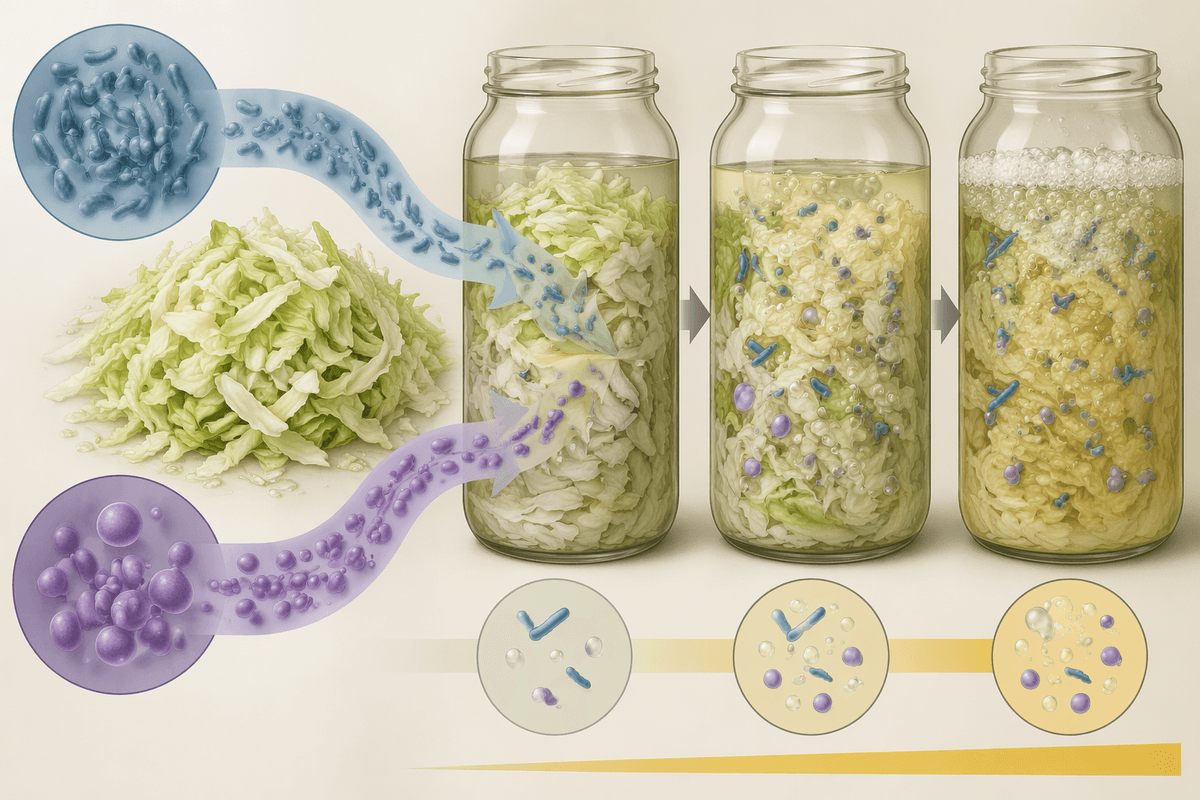
You can sometimes tell the fermentation “path” by the way the jar behaves in your fridge: one batch stays clean and crunchy, another turns softer, fizzier, and suddenly more pungent. That’s not just preference—it can change how a serving sits in your stomach. A more active, gas-producing ferment can feel lively on the tongue and then oddly roomy in your midsection an hour later, especially if you eat it quickly or on an emptier stomach.
Most kimchi and sauerkraut rely on lactic acid bacteria, but the pace and mix can drift depending on salt level, temperature, and how much extra material is in the jar. More acids can read as “bright,” yet that same sharpness may nudge reflux-like sensations for some people. Longer, warmer ferments also tend to deepen funk and, in some situations, raise the chance of a histamine-heavy feeling—flushing, thirst, or a wired-tired vibe—without it being obvious from taste alone.
Texture is part of tolerance, too: softer cabbage breaks down faster, while crunchier shreds can feel easier to portion and slower to overwhelm a meal.
Ingredient complexity versus simplicity changes predictability
You notice it when you try to “keep it simple” and still can’t predict the next day: the same spoonful that felt perfect at lunch can leave you unusually thirsty or a little buzzy at night. That’s where ingredient complexity starts to matter in a practical way. With kimchi, the cabbage is sharing the jar with chili, garlic, ginger, scallions, and sometimes seafood-based seasonings—each one bringing its own sugars, amino acids, and pungent compounds that can shift how fast the ferment turns sharp and how intense it feels in your body.
Sauerkraut’s simplicity can make it easier to troubleshoot. If you’re bloated, you’re usually weighing just portion size, sourness, and sodium, rather than wondering whether the garlic hit you or the spice mimicked reflux. But “simple” isn’t always “stable”: shred size, brine strength, and whether it’s a long-fermented, extra-tangy batch can still change acidity and that histamine-heavy feeling some people describe.
The labels don’t always reveal the whole story. Two kimchis can share the same ingredients yet feel completely different if one has added sugar or was fermented warmer, and two krauts can diverge if one is pasteurized or packed with a fresher, less sour bite. Over a few weeks, predictability often comes down to how many moving parts you’re comfortable tracking.
Spice, heat, and histamine: when “healthy” feels uncomfortable

It often shows up as a small mix-up in your body’s “alarm system”: you eat a few bites that taste bright and cleansing, then your chest feels warm, your nose runs a little, or you start clearing your throat and assume the ferment is “too strong.” With kimchi, that sensation is just as likely to be chili heat plus garlic pungency riding on top of acidity. It can feel similar to reflux even when it’s mostly irritation and temperature, especially if you eat it quickly or late.
Histamine is where the pattern gets harder to read. Some people notice a wired-tired edge, flushing, extra thirst, or restless sleep after certain batches, even when the portion was modest. Fermented foods can be higher in histamine, and longer, funkier ferments may land heavier—yet the signal can get blurred when the jar also brings spice, seafood-based seasonings, or a sharper acid bite. Sauerkraut can still trigger the same “healthy but uncomfortable” feeling, but without the chili it’s sometimes easier to tell whether the issue is sourness, sodium, or that histamine-loaded sensation that doesn’t track neatly with flavor.
One brand is fine for weeks, then a new jar suddenly feels louder in your body. That’s often when it helps to treat “spice” and “ferment” as separate dials—because turning down heat doesn’t always reduce that histamine-heavy, thirst-and-sleep ripple, and turning down portion doesn’t always fix a chili-forward burn.
Portion, frequency, and meal pairing change the experience
You feel it most when you don’t measure: a “few forkfuls” becomes a small pile, and the rest of the meal starts tasting saltier and sharper than you expected. With fermented cabbage, that portion creep matters because acidity and sodium stack quickly, and kimchi’s chili and garlic can make a bigger serving feel even more intense. Sauerkraut can be easier to eat in a steady amount, but it can still tip from “bright” to “too much” once the serving stops being a garnish.
Frequency changes the math, too. A tablespoon once in a while may barely register, while a daily habit can quietly shift thirst, bloating, or that wired-tired feeling some people notice with certain batches. It isn’t always the ferment “getting stronger”—it can be the cumulative load of salt, acid, and potentially histamine-like effects, especially if you’re also eating other aged or fermented foods.
Pairing can smooth the edges. Kimchi alongside a fattier, starchier plate often lands calmer than kimchi on an emptier stomach, where heat and acid can feel more reflux-like. Sauerkraut tends to behave best when it’s balancing something richer, not acting as the main sour element of the meal.
What labels and storage can reveal about live cultures
You notice it at the fridge door: two jars that both say “sauerkraut” can behave completely differently once opened. One stays crisp and predictable for weeks, while another starts fizzing, weeping brine, and turning louder in smell and sourness. That shift isn’t automatically “bad,” but it often tracks with how active the cultures still are—and how much the jar keeps fermenting in your cold kitchen reality.
Labels can quietly explain some of that. If it’s marked “pasteurized” or “shelf-stable,” you’re usually getting fermented flavor without many living cultures, which can mean a steadier acid hit but fewer day-to-day surprises. “Raw,” “unpasteurized,” or “contains live/active cultures” often comes with more variability: pressure when you crack the lid, a sharper tang over time, and sometimes more of that bloating-or-thirst ripple if your portions creep.
Storage details matter, too. A product kept refrigerated before you bought it is more likely to be genuinely active than something that sat on a warm shelf. And once it’s open, warmer fridge zones and frequent lid time can keep fermentation moving—so the “same” kimchi or kraut can slowly become a different food by the end of the jar.
Choosing based on your patterns, not perfect rules
The clue is often a small, delayed reaction: you finish dinner feeling fine, then later you notice you’re reaching for water, your stomach feels a bit “expanded,” or sleep comes with a wired-tired edge. It’s easy to blame fermentation in general, but your body is usually responding to a specific mix of dials—acid level, sodium density, spice/garlic intensity, and whether the jar is still actively changing in your fridge.
If kimchi reliably reads as warmth in the chest or throat-clearing, that may be chili plus acidity acting like reflux even when the portion wasn’t huge. If sauerkraut is the one that leaves you thirsty or puffy, sodium concentration and how often you’re adding “just a little more” can be the quieter driver. And if both occasionally create the same restless, flushed, or extra-thirst pattern, it may be less about the cuisine and more about a funkier, longer-fermented batch—or stacking it with other aged foods that week.
In practice, the best everyday choice is the one you can repeat without constant negotiation: a portion that stays small without effort, a timing that doesn’t punish bedtime, and a label/style (live and variable versus pasteurized and steady) that matches how much inconsistency you can tolerate.







![6 Best Money Market Funds [Protect Your Savings in 2026]](static/image/2026/07/14/fc8225e7-a6f6-459f-8150-f54bd9c52f6f.png)