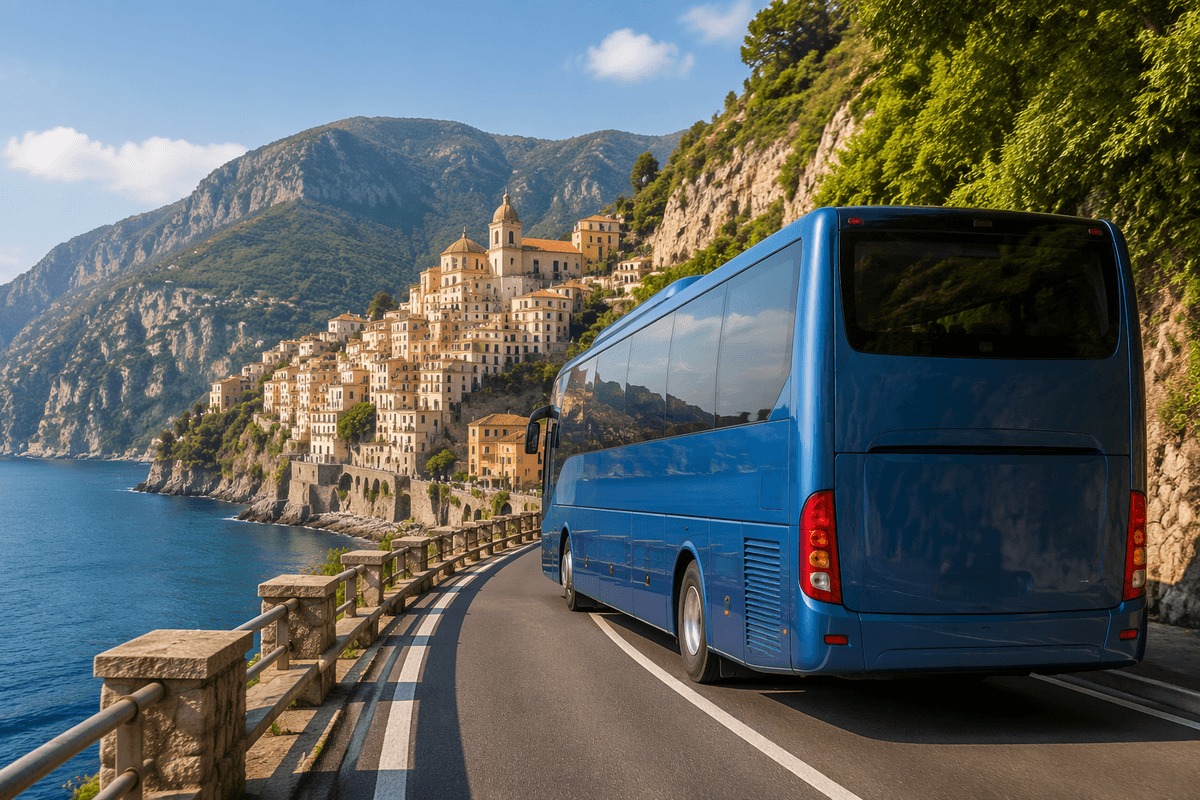
Italy by bus isn’t hard—finding the right bus is
At 7:12 a.m. in Firenze Santa Maria Novella, I had a coffee going cold while three different “to Siena” options competed on my screen—two bus stations, two operators, and one departure that wasn’t actually running that day. The bus itself wasn’t the problem; the problem was figuring out which company owned the route and where it really left from. That’s the moment Italy-by-bus stops feeling “cheap and easy” and starts feeling like a scavenger hunt.
Compared with trains, buses in Italy are often simpler once you’re seated—no platform changes, fewer intermediate stops—but the lead-up is messier. Routes are split across big national brands and small regional operators, and the same town can have multiple termini (city center stop vs. “autostazione” on the edge). You gain reach into smaller places, but you lose the single, consistent timetable experience you get with Trenitalia/Italo.
This matters most on tight days. If you’re doing a 10–12 day loop and you miss one midday bus that only runs a few times, you don’t just arrive late—you quietly lose an entire afternoon. Buses work best for flexible travelers chasing hill towns and coastal gaps; they work poorly for anyone stacking museum bookings, timed tours, or airport transfers without buffer. If you can accept a little ambiguity upfront, the payoff is access trains simply don’t offer.
Choose buses for these routes
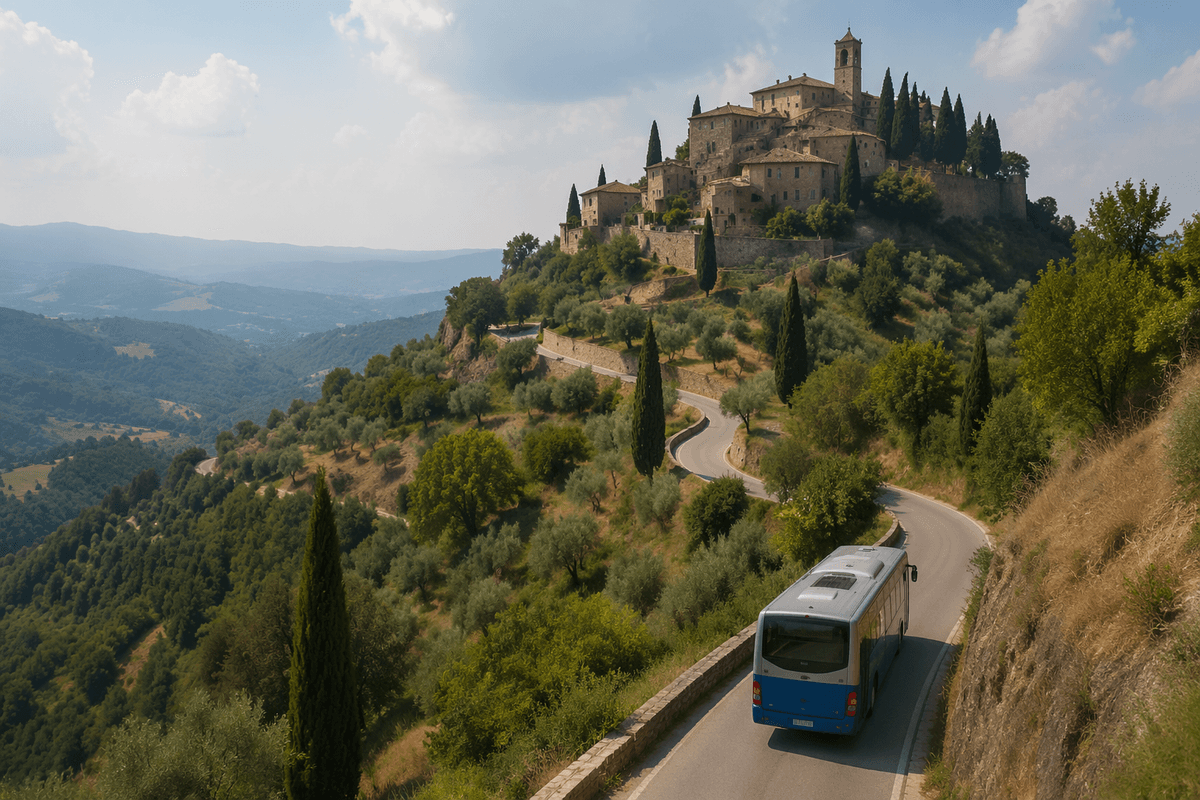
On a paper map, Orvieto to Civita di Bagnoregio looks like a quick hop; at the station board, it’s a shrug unless you already know you’re hunting a regional bus from outside the train building. I stood there with a backpack and a half-charged phone, realizing the “easy” connection depended on one infrequent departure. That’s the pattern: buses win when the train gets you close, but not all the way.
Use buses for hill towns and “last-mile” places where trains either don’t go or force a slow backtrack: Siena to San Gimignano, Orvieto to Civita, Sorrento to Amalfi-side villages, Lecce to coastal spots in Salento. The buses are often cheaper than regional trains, but they can be cramped, traffic-sensitive, and oddly timed (morning-heavy, thin in the afternoon). If you’re the kind of traveler who’s fine swapping a museum slot for a longer lunch when a bus runs late, these routes feel like a cheat code; if you’re stacking timed entries, they’re a liability.
Trains still dominate the “spine” moves—Rome–Florence, Florence–Venice, Naples–Rome—because frequency is your insurance policy. My rule is simple: bus when it saves a transfer or reaches a town center; train when missing one departure would cost you more than the ticket difference.
How to find schedules that match
At 10:46 p.m., I had two tabs open and a notepad line that read “Siena → San Gimignano,” but the times didn’t agree: Google showed a midday departure, the operator’s PDF showed a morning-only run, and the ticket app didn’t show the route at all. That’s the exact point you stop “checking schedules” and start verifying what’s real. The annoying detail is that the correct answer can depend on the day of week, not the season you assume.
What works is a quick ladder: start broad, then narrow fast. Use Google Maps (Transit) or Rome2Rio to learn the stop name and operator keyword, not to “trust the timetable.” Once you have a company name (often a regional operator), jump to that operator’s site and look for a line PDF or “orari” page; those are usually more accurate than aggregator feeds, but less friendly on mobile. If you’re traveling on Sundays or holidays, treat any “school day” schedule like it’s wrong until proven otherwise.
Then sanity-check the connection like you would with trains, but with harsher rules: if there are only 3–5 buses per day, build a buffer that can absorb traffic and a missed stop. I’ll accept a bus plan without a backup only when I’m heading to a place I’m happy to arrive late (beach town, hill town), not when I’m chasing a timed entry or a same-day onward train.
Tickets, seat rules, and validation
At the tabacchi near the station, I had a €20 note in one hand and a screenshot in the other, trying to explain “Siena–San Gimignano, today” while the clerk pointed at a tiny stack of route tickets behind the lottery slips. The ticket looked almost fake—thin paper, no seat number, no QR code—and that’s exactly why people get nervous. Compared with trains, the purchase is often faster, but the proof-of-ride can feel less obvious.
Start by deciding what kind of bus you’re on, because the rules change. Coach-style, longer routes (the ones competing with trains) tend to sell online with a fixed departure time and sometimes an assigned seat; the trade-off is less flexibility if your morning runs late. Local/regional buses often use paper tickets bought in advance (tabacchi, edicola, sometimes a station kiosk), and they may not sell onboard—or they’ll charge more and still refuse if the driver is busy. If you’re planning as you go, this works best for travelers who can buy the ticket the day before and aren’t landing at a stop five minutes before departure.
Validation is the quiet gotcha. Many local tickets must be stamped in a little machine on board or at the stop; until it’s validated, it can look “unused” to an inspector. If the machine is broken or missing, ask the driver to mark it, then keep it handy—stuffing it deep in your bag saves space but costs time when someone asks for it mid-ride. When you’re unsure, choose the boring option: buy early, validate immediately, and don’t assume a screenshot counts as a ticket.
Boarding day: stations, bags, safety
At 6:55 a.m. outside Bologna’s autostazione, I hesitated at a row of bays that all looked the same, watching a small crowd rotate between “Napoli,” “Rimini,” and one handwritten sign taped to a pole. The timetable said “stallo 24,” but the only “24” I could see was on a bus already loading. That five-minute uncertainty is the whole boarding-day problem: the ride can be straightforward, the staging area rarely is.
Compared with train stations, bus terminals are more “fluid”—fewer fixed displays, more last-second platform changes, and a higher penalty for showing up late. If it’s a coach, I aim for 20–30 minutes early because bags may go underneath and the driver might check names or QR codes; the trade-off is time spent waiting in a loud, windy lot instead of a sheltered hall. Local buses are the opposite: they’ll roll up, pause briefly, and leave, which works for light packers but punishes anyone still hunting the correct stop name.
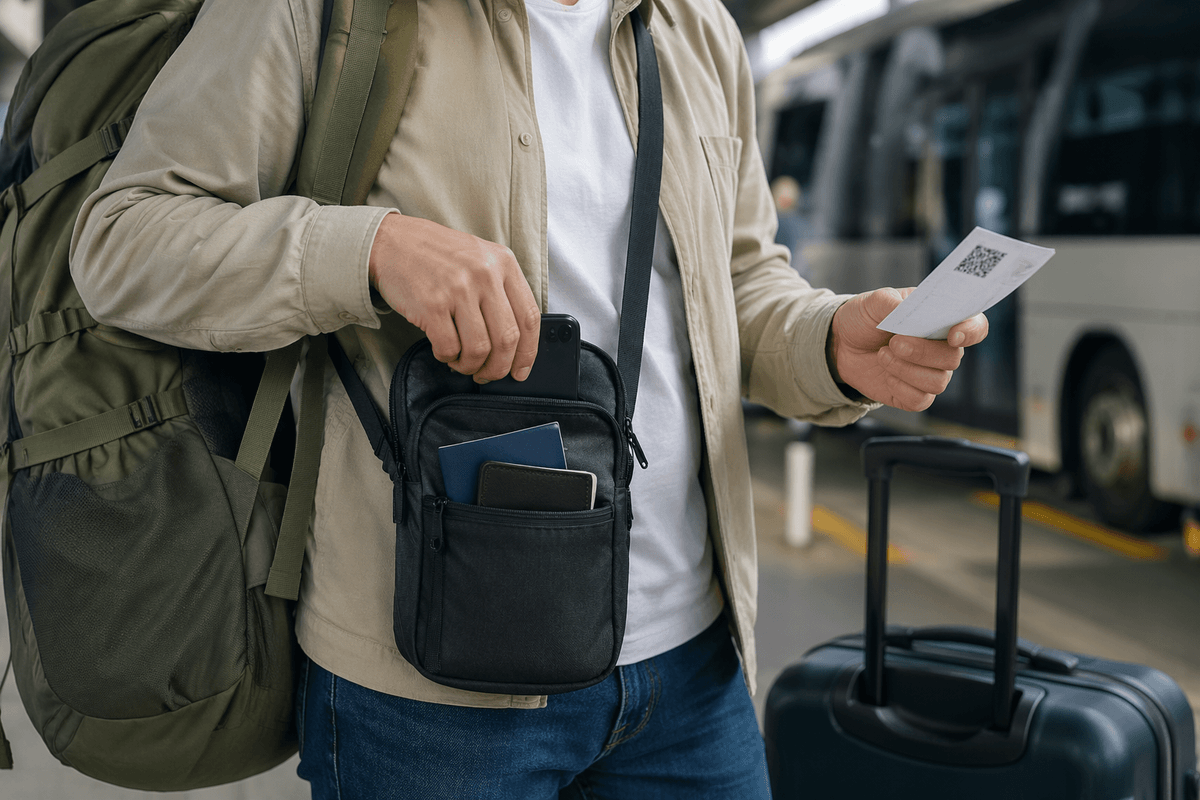
For bags and safety, think like you’re boarding a budget flight. Keep passport, wallet, and phone on your body (not in the big backpack), and don’t bury your ticket where you can’t reach it fast if an inspector appears. Under-bus luggage is usually fine, but it’s best for travelers with one main bag; if you’re carrying a fragile camera setup or you hate being separated from valuables, choose a train segment or a day bus in brighter, busier hours.
The simplest plan for first-timers
At 8:38 p.m., with 12% battery left, I tried to line up tomorrow’s “easy” hop to a hill town and realized the last bus left before my planned lunch ended. The train option cost more, but it ran hourly and didn’t care if I lingered over espresso. That little timing squeeze is where a simple plan beats a perfect plan.
If you’re new to buses in Italy, keep it brutally basic: use trains for the long spine (Rome–Florence–Venice–Naples) and save buses for the last-mile legs where the train dumps you short (Siena–San Gimignano, Orvieto–Civita, Sorrento–Amalfi villages). The trade-off is clear: buses reach better locations for less money, but you pay in frequency. When a route shows only a few departures, treat it like a reservation—even if the ticket is “flexible”—and build a buffer you’d never bother with on a regional train.
The workflow I’d actually repeat is a three-check loop: (1) Google Maps to learn the stop name and the operator keyword, (2) the operator’s own “orari” page/PDF to confirm the day-of-week schedule, (3) buy the ticket in the least romantic way available—online for coaches, tabacchi the day before for local lines—then validate immediately. On boarding day, show up early if bags go underneath, and if the plan relies on the last bus of the day, choose the train instead and call it tuition, not failure.