Why cauliflower keeps showing up in everyday meals
You notice it most on the nights you’re trying not to think too hard: a bag of “cauliflower rice” in the freezer, a mash that looks like potatoes, a pizza base that’s somehow not dough. It can feel a little gimmicky at first, especially if you’ve been burned by swaps that taste “healthy” in a way you didn’t ask for.
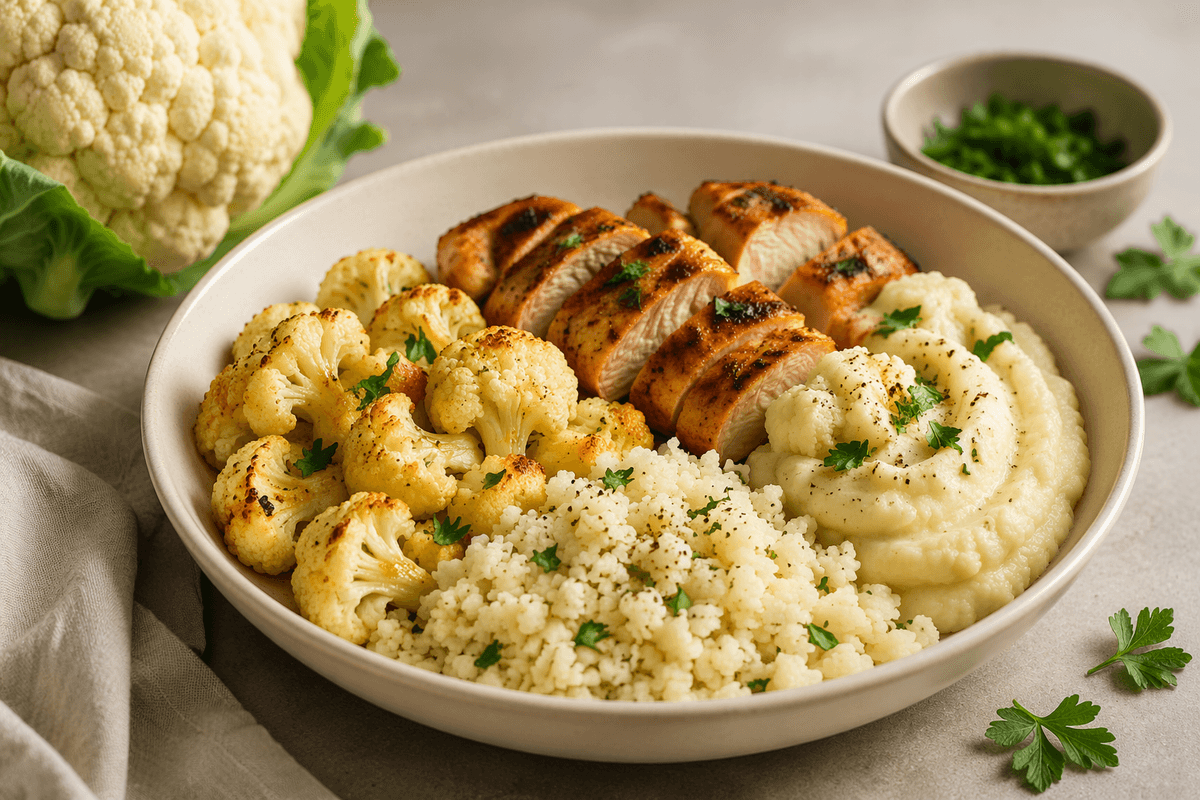
Cauliflower keeps showing up because it slides into the job of a starchy side without bringing the same weight. It’s mostly water with a bit of fiber, so you can pile more onto a plate and still feel like you ate a full meal, not a careful portion. That extra volume changes the rhythm after dinner for some people—less of the quick dip that nudges you toward snacks—though it isn’t perfectly consistent from day to day.
It also helps that cauliflower doesn’t argue with the rest of the meal. It picks up sauce, seasoning, cheese, or curry, so the familiar flavors stay in charge while the base quietly shifts. The “why” often shows up later, not in the first bite: how long you stay satisfied, how your energy feels mid-afternoon, and whether your usual snack time suddenly feels less urgent.
Fullness without heaviness: fiber, water, volume
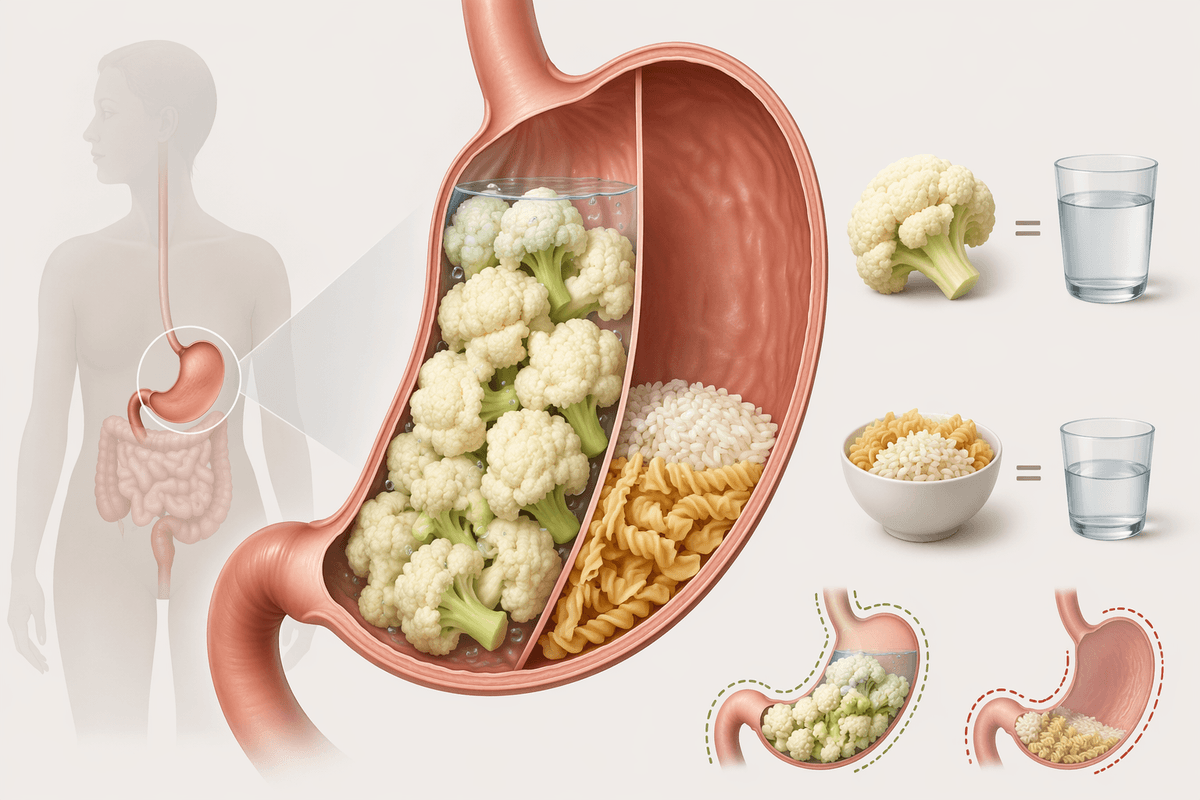
The difference often shows up as a small pause, not a dramatic “I’m so full” moment. You finish a bowl that looks generous, and instead of feeling weighed down, you just feel… finished. Then an hour later, you realize you haven’t started scanning the kitchen the way you usually do, even if the rest of your day is still hectic.
That’s the water-and-volume effect at work. Cauliflower carries a lot of bulk for relatively few calories, so your stomach gets a clearer “we ate” signal without the same density you’d get from a smaller scoop of rice or pasta. The fiber adds another layer: it tends to slow how quickly a meal moves through, which can stretch out satisfaction and soften the sharp rise-and-drop some people notice after refined carbs.
It isn’t foolproof, though. If the cauliflower swap also means you cut back on protein or fat without noticing, the meal can still feel oddly incomplete. And on days you’re already running low on sleep or stressed, hunger cues can get noisy enough that even a high-volume plate doesn’t land the same way.
The quiet nutrient mix that adds up daily
The cue is easy to miss: your fork keeps moving, but the meal feels a little “cleaner” afterward—less of that dry, heavy finish you sometimes get when the plate is mostly grain. Cauliflower doesn’t taste like a multivitamin, yet it quietly changes what the meal delivers when it shows up a few times a week.
Along with the water and fiber, it brings small amounts of nutrients that tend to be underrepresented in rushed meals—vitamin C, vitamin K, folate, potassium, and a bit of choline. None of that is dramatic in a single serving, but over days it can matter because those nutrients usually ride in on plants, not on the refined sides people default to when time is tight.
If cauliflower is drowned in cheese, oil, or creamy sauces, you may still feel fine but notice less steadiness later, because the swap changed volume without automatically balancing the rest of the plate.
Sulfur compounds, cooking smells, and body responses
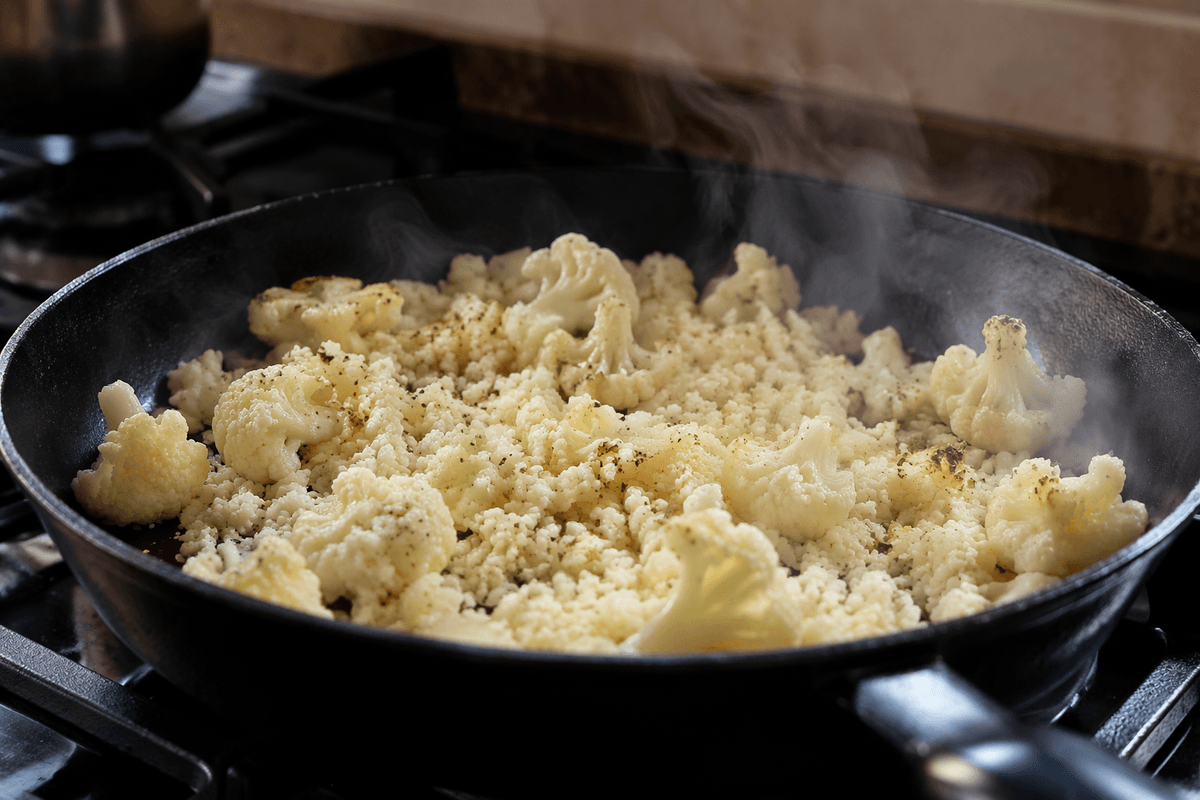
You usually notice it before you taste it: that cabbage-y smell that blooms as soon as the pan heats up. For a lot of people, it’s the first moment cauliflower stops feeling “neutral,” and it can trigger a quick assumption that something is off—either with the food or with their own digestion.
That smell is largely the plant’s sulfur-containing compounds becoming more obvious with chopping, blending, and heat. In some situations, those same compounds can make the after-effects feel louder, too: more burping, a gassier evening, or a slightly sharper “full” sensation than you expected from a light side. It doesn’t happen to everyone, and it can vary with portion size and how finely it’s broken down.
A cauliflower-heavy meal may feel great right away because the volume lands, then feel different later as gut bacteria work on the leftover fibers and compounds. If the pattern repeats—especially with big bowls of cauliflower rice—it can help explain why a swap that improves snacking later can still come with a little extra noise along the way.
When a smart swap creates unexpected bloating
It can be a little confusing when the swap “works” on paper, but your waistband feels tighter by bedtime. Dinner looked lighter, the plate was still full, and yet there’s that rounded, pressured feeling that wasn’t there when you ate the same meal over rice or pasta.
A lot of that comes down to what you replaced, not just what you added. Cauliflower brings more fiber and fermentable bits than refined grains, and your gut may treat that as extra work—especially if you go from a small scoop of starch to a large mound of cauliflower rice. The volume that helps you feel satisfied can also mean more material moving through, plus more fermentation later on, which can translate into gas and bloating for some people.
The “smart swap” can also stack up in sneaky ways. Cauliflower crust plus a big salad, or cauliflower mash alongside beans, can feel like a clean, high-volume dinner—until the combined fiber load hits all at once. If the pattern keeps showing up, it may not mean cauliflower is “bad,” just that your usual portion logic (one big side, done) doesn’t always carry over without some digestive noise.
Texture tricks that change satisfaction and consistency
The first thing that changes isn’t the flavor—it’s the feel. Cauliflower rice can land a little wet, almost squeaky, and mash can turn oddly thin if you expect the same dense drag as potatoes. When that happens, it’s easy to assume the meal “didn’t count,” even if you’re technically eating a big portion.
Texture is part of how your brain decides a meal is complete. Refined grains tend to be uniform and steady, while cauliflower is more variable: the pieces can be fluffy one night, watery the next, or slightly crunchy in the middle. If it’s too soft, you may eat faster and miss that slow, satisfied finish. If it’s too firm, it can feel like you’re still waiting for comfort that never shows up.
A small difference in handling can change that experience. Drying it out a bit, keeping pieces larger, or mixing it with a more consistent base (even half-and-half with rice or potatoes) can make the bite feel more “real,” which is often what steadies the after-meal signal. The same bag, the same pan, and it still doesn’t turn out identical—so your fullness cues can feel unpredictable until you notice which textures actually satisfy you.
Who may need extra caution or personalization
Sometimes the clue is subtle: you do the same cauliflower swap you liked last week, and this time it sits “higher,” or you’re distracted by a gassy, unsettled feeling that makes you question whether your body is just being difficult. In reality, the same food can land differently depending on stress, sleep, and what else showed up on the plate.
People who already deal with easily triggered digestion often notice cauliflower more, especially in larger, rice-sized portions where the fiber and fermentable carbs add up fast. If you tend to bloat with onions, beans, or big salads, cauliflower-heavy meals can stack into a louder evening even when the meal felt light at first.
There are also a few situations where “healthy swap” thinking can miss the details: if you monitor vitamin K intake (often for medication reasons), if you’re prone to kidney stones and watch certain plant compounds, or if you’re relying on cauliflower to replace most carbs and then feel oddly flat or snacky later. The useful signal is rarely perfection—it’s noticing which portions and pairings keep you steady without creating extra noise.






![6 Best Money Market Funds [Protect Your Savings in 2026]](static/image/2026/07/14/fc8225e7-a6f6-459f-8150-f54bd9c52f6f.png)